Oct. 9, 2023
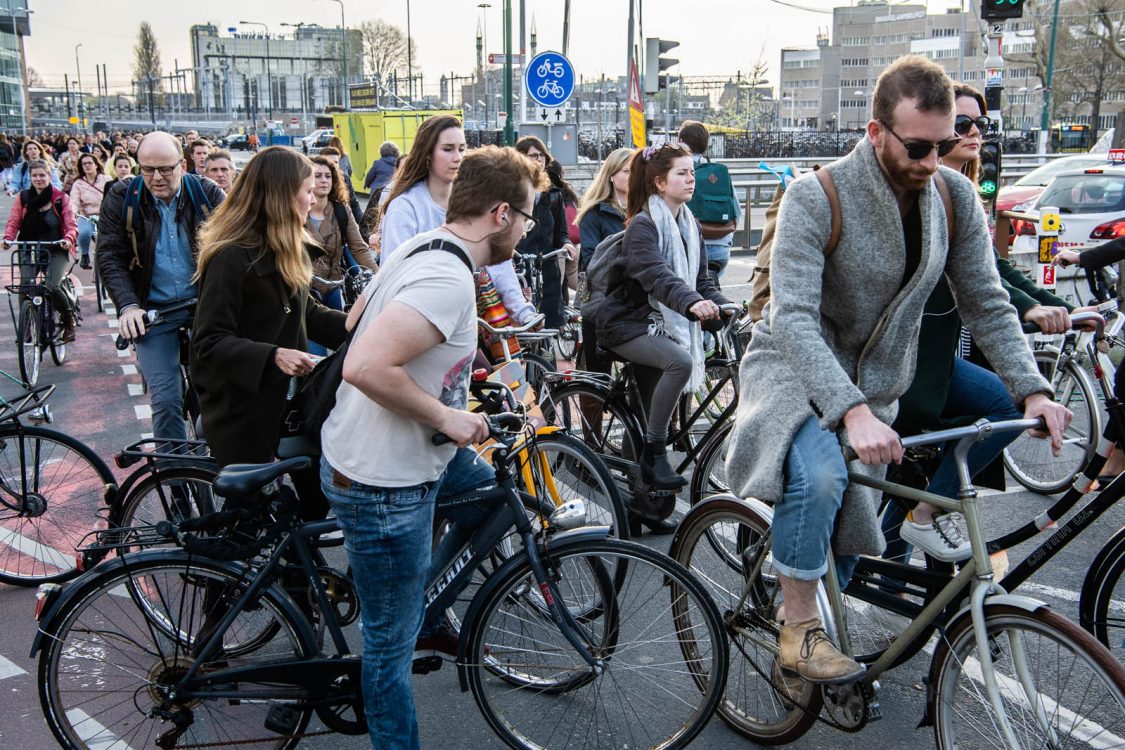
The increasing use of bicycle paths in the Netherlands, especially in urban areas such as Amsterdam, and the evolution of bicycle traffic caused by the introduction of e-bikes, emphasize the need for a robust and safe bicycle infrastructure. The Strategic Road Safety Plan (SPV) has played a vital role in developing guidelines and sharing knowledge to promote safe road use. In the broader context, it looks at how addressing risk, speed control, and detailed standards, as suggested by CROW publications, contribute to safety on bicycle paths.
Guidelines and Speed Management
The SPV has developed detailed report that provides insight into what constitutes "adequately safe" bike lanes. (The SPV report is here to be found). This not only looks at bike lane width and capacity with respect to the number of passersby during peak hours but also at the speeds of cyclists. The rise of e-bikes has caused an imbalance between the speeds of traditional bicycles and electrically powered variants. In Amsterdam, where up to 17,636 cyclists and moped riders pass through at certain locations per day, there has been a visible increase in cyclists travelling at speeds above 30 km/h. From this, the question arises: is it time for speed-limiting measures, warning signs or even enforcement to ensure safety?
CROW's Contribution and Broader Perspective.
SPV's document uses some insights from CROW publications, citing specific standards and diagrams that indicate what width a bicycle path should have, depending on the number of passers-by during rush hour in one or two directions. This detailed level of specification provides a technical basis for safety standards and bicycle path design. (The CROW report can be found here).
Risk-based Approach to Implementation.
Despite the availability of these guidelines, there was still work to be done in the previous year; about 31% of the municipalities had not yet conducted a risk analysis, which is essential for obtaining subsidies from the road safety investment impulse. An expert team from Antea Group and Arup shared experiences and expertise with various agencies to support municipalities in preparing these risk analyses and implementing the risk-based approach in road safety policy.
Together towards Safety
The balance between maintaining speeds, providing adequate safe infrastructure, and implementing a risk-based approach presents a complex challenge. In the evolution toward safer bike lanes, contributions and feedback from citizens are especially valued. What is your vision for the evolution of our bike lanes and roads?
Your opinion counts in this dialogue! Let us know your insights via our LinkedIn so that together we can continue to build a safe and accessible bicycle infrastructure for all. For more information, contact us or download our documents to learn more about our solution in safe cycling.