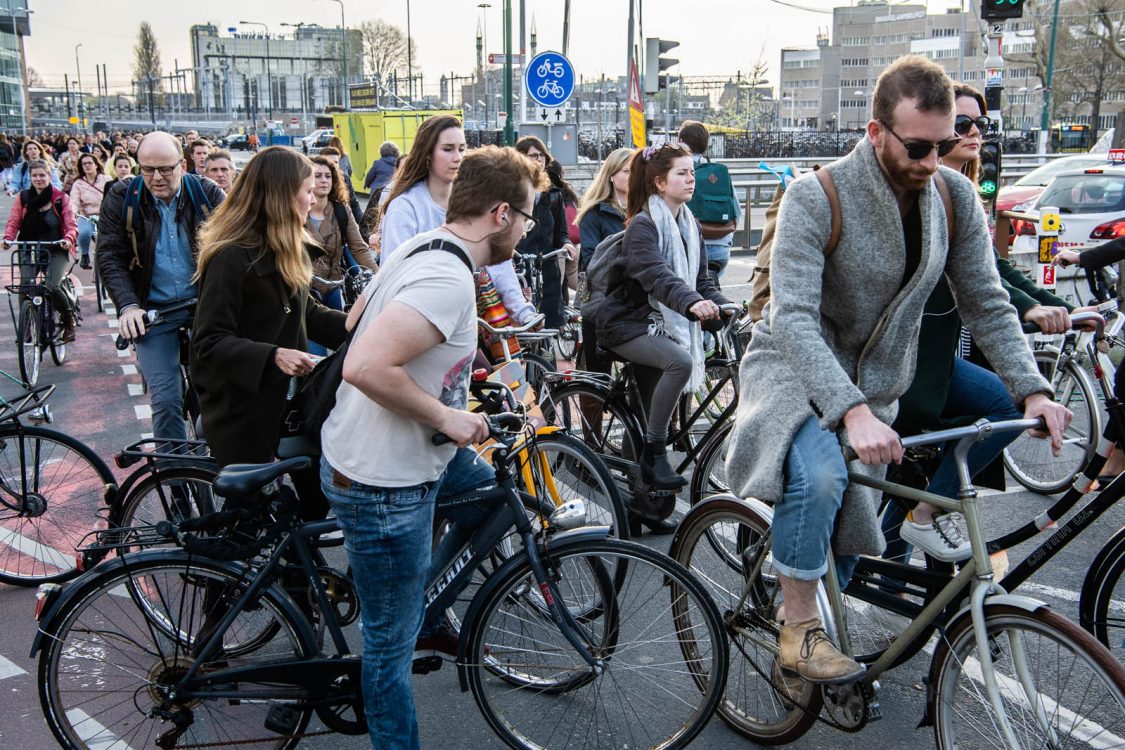
The rapid rise of e-bikes, fatbikes, cargobikes, and speed pedelecs has led to a significant difference in speed between the traditional bicycle and its electrically powered counterparts. Speeds on bicycle lanes now regularly fail to meet the detailed standards for robust and safe bicycle infrastructure proposed by the CROW (Center for Regulation and Research in Soil, Water and Road Construction and Traffic Engineering).
New Legislation: Minimum Age and Helmet Obligation for Fatbikes
In response to growing concerns about road safety, a motion was introduced in the House of Representatives to introduce stricter rules for fatbikes. The proposed measures include a minimum age of 14 and a helmet requirement for this type of electric bike. This decision is supported by a parliamentary majority.
Minister Madlener indicated earlier this week that he is willing to consider measures supported by a majority of the House of Representatives. While he recognizes that there are legal challenges in distinguishing fatbikes from other electric bikes, he sees opportunities to make a clear distinction with concrete criteria such as weight, tire thickness and the non-adjustable saddle.
Despite support for these proposed measures, experts stress that a broader approach is needed to ensure road safety in the longer term. So while the proposed rules seem like a step in the right direction, the question remains: what more can be done to further improve safety on our bike lanes?
The Answer vCROW to NNEW CHALLENGES
CROW plays a crucial role in devising solutions to issues surrounding infrastructure, public space, and traffic and transport. Within this organization is the CROW Bicycle Council, the heart of bicycle policy for Dutch governments. The Strategic Plan for Traffic Safety (SPV) report provides a broad perspective on how risk management, speed controls, and the standards proposed by CROW contribute to safer bicycle paths. (The SPV report ishereto find)
How is CROW responding to these changing factors? What solutions is CROW putting forward? And are our current bike paths still up to the new wave of electric vehicles, where the fatbike in particular is making headlines.
Additional Measures of Speed Control.
In addition to the proposed measures, several initiatives have already been taken to improve speed and safety on bike lanes. For example, the police in Amsterdam have recently introduced advanced roller banks that can test fatbikes, speed pedelecs and other electric bicycle variants for speed. These roller banks have already resulted in the first fines, with violators having to pay amounts of 290 euros each time. With the purchase of 250 new roller banks, the minister intends to further strengthen enforcement, possibly by having them used by special investigating officers (boa's) as well.
In addition, fatbike manufacturers such as Brekr, Phatfour, Doppio and Knaap are actively cooperating to discourage the illegal rigging of their vehicles. Resellers who cooperate with or fail to report the rigging of fatbikes may lose their sales rights. In addition, more and more municipalities are pushing for stricter regulations and enforcement against souped-up fatbikes.
Experiments for Safer Bike Lanes.
In Amsterdam, technology is currently being experimented with to automatically limit e-bikes to a speed of 15 km/h in certain zones. This innovative experiment requires close cooperation with manufacturers and could be an important step in increasing safety on bike lanes.
The Importance of Accurate Measurements
In addition to laws and regulations, there is also a growing need for accurate data on where and when speeding occurs. To measure is to know, and this is where MultiSensors, with their advanced solutions such as the Signum, offers a valuable contribution. This technology enables the detailed recording of speed, direction, location, the number of users, and the exact moments of passing. The My Cycle Traffic platform uses this data to provide valuable insights to governments and other stakeholders. These insights help to take targeted measures and adjust infrastructure where necessary for safer use of bike lanes.
With the proposed measures and additional initiatives, the Netherlands seems to be one step closer to a safer bicycle infrastructure. However, as the minister points out, it remains a search for the right balance between freedom for cyclists and the protection of all road users.